Español
Car Accidents
Rideshare Accident Lawyers in Arizona
Why Rideshare Collisions Are Different from Other Claims
Rideshare crashes can leave injured passengers, drivers, and other motorists facing medical expenses, lost income, and a difficult recovery. Whether the collision involves an Uber, Lyft, Waymo, taxi, or limousine service, the aftermath can be far more complicated than many people expect.
Unlike many traditional car accident claims, rideshare collisions often involve questions about insurance coverage, driver status, and liability. Multiple insurance policies may potentially apply, and different companies, drivers, or third parties may become involved in the claims process. These issues can make determining responsibility and pursuing compensation more challenging.
If you were injured in a rideshare crash in Arizona, understanding your legal options early can make an important difference. A rideshare accident lawyer can help investigate the crash, identify potentially responsible parties, preserve evidence, and pursue compensation for the losses you have suffered.
Questions About Responsibility Should Be Answered With Facts

Uber and Lyft Accident Claims
Uber and Lyft provide convenient transportation for millions of people, but collisions involving rideshare vehicles can create legal and insurance questions that are not always present in a traditional car accident claim. Passengers, rideshare drivers, other motorists, pedestrians, and cyclists may all be affected by the same incident.
One reason these claims can become more complicated is that Uber and Lyft generally classify their drivers as independent contractors rather than employees. Unlike many taxi or limousine companies, rideshare drivers typically use their own vehicles and operate independently through the rideshare platform. As a result, questions about liability and insurance coverage may require a closer examination of the circumstances surrounding the crash.
Arizona drivers are required to maintain liability insurance, and rideshare companies also maintain insurance coverage that may apply in certain situations. An Uber accident lawyer or Lyft accident lawyer can help investigate the collision, identify potentially responsible parties, and build a rideshare accident claim that reflects the full impact of the injuries and losses suffered.
Autonomous Car and Waymo Collisions
Autonomous car crashes present challenges not typically seen in other vehicle collisions. While Waymo vehicles use advanced technology and artificial intelligence, liability questions can become more complicated after a crash.
Determining responsibility in a Waymo collision may require a close examination of several factors, including other motorists, road conditions, and the performance of the technology itself. Questions may also involve how the autonomous system operated and who may be legally responsible for it.
Sensor blind spots, system malfunctions, and the negligence of other drivers can all contribute to autonomous car crashes. An autonomous car accident lawyer may need to review evidence not typically involved in a traditional crash investigation.
Taxi and Limo Collisions
Taxi and limousine crashes can involve many of the same types of collisions seen in other motor vehicle collisions, but questions of liability are often more complex because commercial transportation companies may also be involved. An injured passenger, pedestrian, cyclist, motorcyclist, or occupant of another vehicle may have a claim depending on the circumstances of the incident.
These collisions may result from driver negligence, including speeding, distracted driving, impaired driving, drowsy driving, or other unsafe conduct. In some situations, the taxi or limo company may also share responsibility if it failed to properly maintain a vehicle, train a driver, or address known safety concerns.
A taxi accident lawyer may need to examine both the actions of the driver and the role of the transportation company when investigating a claim. Identifying all potentially responsible parties is often an important step in pursuing compensation after a serious taxi or limo incident.
Common Injuries in Rideshare Crashes

Broken Bones
Fractures may require immobilization, surgery, physical therapy, or time away from work during recovery.

Internal Injuries
Internal bleeding or organ trauma may not be obvious right away and should be evaluated quickly after a serious crash.

Whiplash, Neck, and Back Injuries
Whiplash, neck injuries, and back injuries may cause pain, stiffness, reduced mobility, headaches, numbness, or radiating discomfort.

Brain Injuries and TBIs
A direct impact or sudden crash force can cause headaches, dizziness, memory problems, difficulty concentrating, or changes in balance.

Muscle Strain, Airbag Burns, and Seatbelt Injuries
Muscle strains, airbag burns, bruising, and seatbelt injuries may still require treatment, documentation, and time to heal.
Rideshare crashes can cause a wide range of injuries, from soft tissue damage to life-altering trauma. The severity of an injury often depends on factors such as vehicle speed, point of impact, and the circumstances of the collision.
Insurance Coverage After a Rideshare Collision
Insurance coverage is often one of the most complicated aspects of a rideshare accident claim. Unlike a typical car collision, multiple policies may apply depending on the vehicle involved, who was affected, and the circumstances of the crash.
In an Uber or Lyft incident, liability and insurance questions can become more complicated because rideshare drivers generally operate as independent contractors rather than employees. Drivers are required to carry their own insurance, and rideshare companies also maintain insurance coverage that may apply in certain situations. Determining which policies may be available often depends on the facts of the collision.
Taxi and limousine crashes can involve a different set of liability questions. If a crash results from a driver’s negligence, such as speeding or distracted driving, an injured person may have a claim against the driver. In some circumstances, the transportation company may also share responsibility under vicarious liability, a legal principle based on the idea that the party who controls and benefits from an activity should bear the costs of the harm it causes. As a result, a company may be held responsible for the actions of its employees even if the company itself did not commit any wrongdoing.
Autonomous car collisions may present additional challenges. Liability can involve multiple potentially responsible parties, including another driver, the vehicle’s operator, the company behind the autonomous technology, software developers, or, in limited circumstances, government entities responsible for roadway design or maintenance.
Determining which insurance policies may apply after a rideshare incident is not always straightforward. A rideshare accident lawyer can help investigate the collision, identify parties that may be responsible, evaluate available insurance coverage, and pursue compensation for crash-related losses.
Building and Proving a Rideshare Accident Claim
Building a successful claim often requires more than showing that a collision occurred. Because multiple drivers, companies, and insurance carriers may be involved, identifying what happened and who may be responsible is often critical.
Relevant materials may include medical records, vehicle data, and other evidence that helps establish how the crash occurred and the extent of the injuries. Preserving evidence is especially important when liability is disputed.
A rideshare accident lawyer can help identify responsible parties and build a claim that reflects the full impact of the injuries and losses suffered. While many cases resolve through settlement, thorough preparation can strengthen a client’s position throughout the process.
How Torgenson Law Can Help After a Rideshare Collision
Rideshare accident claims often involve questions that are not present in a typical car collision case. Determining which insurance policies may apply, identifying potentially responsible parties, and preserving important evidence can all become critical parts of the process.
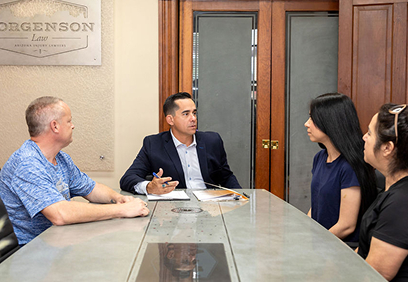
At Torgenson Law, we investigate rideshare incidents involving Uber, Lyft, Waymo, taxis, limousines, and autonomous vehicles. Our team works to gather evidence, evaluate available insurance coverage, identify liable parties, and build claims that reflect the full impact of our clients’ injuries and losses.
If you were injured in a rideshare crash in Phoenix or elsewhere in Arizona, a rideshare accident lawyer from Torgenson Law can help you understand your legal options and pursue the compensation you may be entitled to recover.
Frequently Asked Questions
Responsibility can depend on how the crash happened and who was involved. In some cases, liability may involve a rideshare driver, another motorist, a taxi or limo company, the operator of an autonomous vehicle, or another party whose actions contributed to the crash.
Yes. This is one reason rideshare claims can feel confusing after a crash. Depending on the circumstances, more than one insurance policy may apply, and each policy may have different rules, limits, or coverage questions.
Yes. Some injuries may not be obvious right away, especially when adrenaline is high after a collision. Concussions, internal injuries, nerve damage, and soft tissue injuries may develop or worsen over time. Getting medical attention can help protect your health and document how the injury may be connected to the crash.
In many situations, yes. Passengers are rarely responsible for causing a collision, but they may still be left dealing with pain, medical bills, missed work, and uncertainty. If another party’s negligence contributed to the crash, an injured passenger may have the right to pursue compensation.
Try to get medical care, report the incident, save ride information from the app, take screenshots if possible, and keep records of your injuries, treatment, and expenses. A rideshare accident lawyer can help review what happened, identify possible insurance coverage, and explain your options.
Get Straight Answers Now – Free Consultation
When you are hurt, you need lawyers who will have your back every single step of the way.
Talk to a Lawyer Now
Locations We Serve
- Phoenix
- Tucson
- Mesa
- Chandler
- Scottsdale
- Glendale
- Gilbert
- Tempe
- Peoria
- Yuma
- Avondale
- Goodyear
- Flagstaff
- Queen Creek
- Maricopa
- Casa Grande
- Apache Junction
- Prescott
- Kingman
- Casa Adobes
- Catalina Foothills
- Laveen
- Fountain Hills
- Sedona
- Show Low
- Paradise Valley
- Cave Creek
- Page
- Safford
- Carefree
- Litchfield Park
- Buckeye
- Tolleson
- Payson
- Globe
- Lake Havasu
- Sedona
- Nogales
- Bisbee
- Parker
- Quartzite