Although cyclists share Arizona roads with cars, trucks, and other vehicles, they have little protection when a collision occurs. According to ADOT’s Arizona Motor Vehicle Crash Facts report, 1,349 bicyclists were injured, and 44 were killed in Arizona in 2024.
Bicycle crashes have also shown an upward trend, from 1,306 in 2023 to 1,379 in 2024 and 1,640 in 2025, an increase of approximately 19% from 2024 to 2025. By contrast, total Arizona traffic crashes fell 4.4%, from 123,535 in 2024 to 118,052 in 2025, showing that bicycle crashes remain a distinct roadway safety issue.
The City of Phoenix’s 2024 Traffic Collision Summary recorded 304 bicycle collisions, 290 injuries, 15 fatalities, and 57 hit-and-run collisions in 2024. The report also found that 51% of bicycle collisions occurred at locations without traffic controls, while 23% occurred in dark conditions and another 6% at dawn or dusk.
Earlier Phoenix bicycle-specific reports provide additional detail about where and when these crashes occur. The city’s 2021 Bicycle Related Collision Summary found that 80% of bicycle collisions occurred at or within 150 feet of an intersection, and that crashes occurred most frequently between 3 p.m. and 6 p.m. The same report found that male cyclists were involved at a ratio of about 5 to 1, with men ages 26 to 35 representing the largest group.
An earlier 2016 Phoenix Bicycle Collision Summary adds further context, finding that 36% of collisions occurred in intersection crosswalks and 20% at driveways. Together, these reports show that many Phoenix bicycle crashes cluster around predictable roadway conflict points.
There is no single cause behind Arizona bicycle crashes. Several recurring collision patterns can place cyclists at particular risk.
Drivers may turn across a cyclist’s path, fail to see an approaching bicycle, or otherwise fail to yield. Because cyclists are less visible than cars, drivers may not notice them until there is little time to react. That risk is consistent with Phoenix data showing that a large share of bicycle collisions occur at or near intersections.
A driver making a right turn may cross directly into the path of a cyclist traveling beside the vehicle. These crashes can occur even when the cyclist is riding in a designated bike lane.
A driver or passenger in a parked vehicle may open a door into a cyclist’s path. The cyclist may strike the door directly or swerve into moving traffic while trying to avoid it.
Speed, distraction, or insufficient passing distance can lead to devastating collisions when a motorist overtakes a bicycle. Arizona specifically requires drivers to provide at least three feet of clearance when passing a cyclist.

Potholes, debris, construction zones, poorly maintained bike lanes, or inadequate signage can also contribute to bicycle crashes. Depending on the circumstances, responsibility may extend beyond a driver to a government entity or another party responsible for the roadway.
Unlike vehicle occupants, cyclists have little structural protection in a crash, which can leave them vulnerable to a wide range of injuries. These may include concussions and traumatic brain injuries, facial or dental trauma, fractures, and back or spinal injuries. Road rash, other skin injuries, and internal injuries are also common.
The severity of an injury can depend on the speed and angle of impact, where the cyclist lands, whether another vehicle strikes the cyclist after the initial collision, and other circumstances.
Arizona law recognizes bicyclists as legitimate roadway users. Under A.R.S. § 28-812, a cyclist riding on a roadway or adjoining shoulder generally has the same rights and duties that apply to drivers, subject to bicycle-specific rules.
Under A.R.S. § 28-815, cyclists traveling slower than normal traffic generally must ride as close as practicable to the right side of the roadway. However, there are important exceptions, including when passing, preparing for a left turn, avoiding road hazards, or traveling in a lane too narrow for a bicycle and motor vehicle to safely share side by side.
Arizona also has a three-foot passing law. A motorist overtaking a bicycle traveling in the same direction must exercise due care and leave at least three feet between the vehicle and bicycle until safely past.
For a more detailed explanation, see our guide to cyclist rights in Arizona.
The growing use of electric bicycles adds another dimension to bicycle safety in Arizona.
Arizona recognizes three types of qualifying e-bikes:
To qualify under Arizona’s statutory definition, an electric bicycle must have operable pedals and an electric motor under 750 watts.
Under A.R.S. § 28-819, e-bike riders generally have the same rights and responsibilities as traditional bicycle riders, although rules governing where different classes may operate can vary.
The growing use of e-bikes has also prompted community concerns about e-bike safety, particularly around roadway conditions and safe riding environments.
One challenge in evaluating e-bike accidents in Arizona is that statewide crash reporting does not yet provide the same clean, separate statistical picture available for bicycle crashes overall. As e-bikes become more common and can travel at higher assisted speeds than traditional bicycles, accurately identifying them in crash data will become increasingly important.
Determining liability depends on how the collision happened.
A negligent driver may be responsible for failing to yield, making an unsafe turn, driving distracted, speeding, or passing too closely. In other cases, a dangerous roadway condition may raise questions about responsibility by a government entity. Defective bicycle or vehicle components could potentially involve a manufacturer or distributor.
More than one party may also share responsibility.
Evidence can include police reports, photographs and video, witness statements, vehicle damage, medical records, traffic-camera or surveillance footage, electronic vehicle data, and evidence from the crash scene.
An Arizona bicycle accident attorney can identify potentially responsible parties, investigate the crash and preserve evidence, communicate with insurers, and evaluate available sources of compensation.
Cyclists remain among the least physically protected people on the roadway, so a collision that causes relatively limited damage to a vehicle can have serious consequences for the person riding the bicycle.
Understanding how a bicycle crash happened, and which roadway rules applied, can be critical to determining who was responsible.
Torgenson Law has represented injured Arizona cyclists. In one case, our client was awarded more than $45,000 after being struck by a vehicle while riding a bicycle. Another client received $25,000 after an SUV struck and ran over her bicycle, causing a foot injury. These cases are part of the firm’s broader case results.
If you were injured while riding a bike in Arizona, our team can investigate the crash and explain your legal options. Learn more about our Arizona bicycle accident lawyers or contact us for a free consultation.
Arizona recorded 1,640 bicycle crashes in 2025, up from 1,379 in 2024, an increase of approximately 19%.
Generally, yes. A.R.S. § 28-812 gives bicyclists using Arizona roadways many of the same rights and duties that apply to motor vehicle drivers, subject to bicycle-specific laws.
Arizona law requires drivers to leave at least three feet of space when overtaking and passing a bicycle traveling in the same direction.
Qualifying Class 1, Class 2, and Class 3 electric bicycles are generally subject to the same laws as traditional bicycles, although additional rules govern where certain e-bike classes may be operated.
Depending on the circumstances, liability may fall on a negligent driver, a government entity responsible for unsafe roadway conditions, a product manufacturer or distributor, or multiple parties.
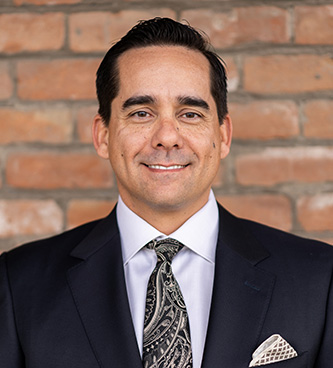
John Torgenson is a highly experienced personal injury lawyer with over 20 years of practice in Arizona. He earned his Bachelor’s degree from the University of Utah and his Juris Doctor from Notre Dame. John has a proven track record of securing substantial verdicts and settlements, including an $8.25 million recovery for a gunshot injury victim. His expertise has earned him AVVO ratings and recognition as a Super Lawyer.
John is also a sought-after lecturer on personal injury law, sharing his extensive knowledge with peers and aspiring attorneys. Beyond his legal practice, John is an avid golfer and actively supports organizations like the Military Assistance Mission, Arizona School for the Arts, Page Balloon Regatta, University of Arizona Foundation, Junior Achievement of Arizona, and the Tim Huff Pro Bono Golf Classic.
Passionate about advocating for injury victims, John dedicates his career to battling insurance companies and corporate interests, ensuring that the rights of those who are hurt are vigorously defended.