A driver who runs a stop sign can enter an intersection with little or no warning, leaving other motorists, pedestrians, and cyclists almost no time to react. These crashes frequently involve side impacts, turning vehicles, or people crossing through an intersection.
If someone ran a stop sign and hit you, what you do immediately afterward can help protect both your health and a potential injury claim. Arizona law also provides specific rules governing stop signs and right-of-way, which can become important when determining who caused the collision.
Stop sign violations can produce several types of collisions. T-bone crashes are particularly common when a driver enters an intersection directly into another vehicle’s path. Other scenarios include left-turn collisions, four-way-stop disputes, rear-end crashes near intersections, and collisions involving pedestrians or cyclists.
Even a seemingly straightforward rear-end collision can produce significant injuries.

Sudden side or frontal impacts can cause whiplash, traumatic brain injuries, spinal injuries, internal injuries, and facial trauma such as a broken nose.
Some symptoms may not be obvious immediately after the crash. Neck pain and stiffness associated with whiplash, for example, may become more noticeable after the initial shock of the collision has passed.
First, stay calm and check yourself and others for injuries. If possible, remain at the scene and move to a safe location without leaving the immediate area.
Call the police, particularly when someone is injured or there is substantial property damage. Exchange contact and insurance information with the other driver, but avoid arguing about fault at the scene.
Document as much as possible. Take photographs or video of the vehicles, damage, stop sign, intersection, skid marks, debris, and surrounding area. Get contact information from witnesses before they leave.
These early steps can become particularly important in a failure-to-yield collision where the drivers later give conflicting versions of what happened.
Under A.R.S. § 28-855, a driver approaching a stop sign must stop before entering the crosswalk. If there is no crosswalk, the driver must stop at a clearly marked stop line or, if there is no line, at the point nearest the intersecting roadway where approaching traffic can be seen.
In a typical stop sign accident, the driver who fails to come to a complete stop or fails to yield the right-of-way is usually at fault. However, there can be important nuances at four-way stops, including which driver arrived first and which vehicle had the right-of-way. Arizona law generally requires the driver on the left to yield when two vehicles approach an intersection at approximately the same time.
Arizona law requires drivers to obey stop signs and yield when required, and crashes caused by drivers who fail to obey stop signs can raise important questions about right-of-way and fault.
A statement that the other driver ran the stop sign may not be enough if they dispute what happened. Police reports, witness statements, dashcam footage, photographs, vehicle damage, and collision reconstruction can all help establish how the collision occurred.
An attorney can also move quickly to identify nearby businesses, homes, or traffic cameras that may have captured the collision before footage is erased or overwritten.
Stop sign crashes can become a he-said, she-said dispute when each driver gives a different account.
Insurance companies may compare the drivers’ statements with physical damage, the police report, photographs, witness accounts, and available video. Without clear evidence, an insurer may dispute fault, assign a percentage of responsibility to each driver, or deny the claim.
Notify your own insurer promptly and provide accurate facts about what occurred. Before giving a recorded statement to another driver’s insurance company, it may also be helpful to speak with an attorney about protecting your claim.
A lack of eyewitnesses does not necessarily prevent you from pursuing a stop sign collision claim.
Vehicle damage can reveal the direction and angle of impact. Police may also document skid marks, debris, final vehicle positions, and statements made at the scene. Dashcams, traffic cameras, doorbell cameras, or nearby business surveillance may provide additional evidence.
In more serious cases, crash reconstruction can use physical evidence to help determine how the vehicles moved before and during the collision.
A citation for running a stop sign can support the investigation by documenting that an officer believed a traffic violation occurred. However, a ticket does not automatically determine civil liability in an injury claim.
Insurers and, if necessary, a court can consider the citation along with witness accounts, photographs, video, physical evidence, and the circumstances surrounding the crash.
If another driver caused the collision, a personal injury claim may seek compensation for both the financial losses and personal harm resulting from the crash, including medical costs, lost income, pain and suffering, and property damage.
The amount available depends on the injuries, documented losses, insurance coverage, and evidence establishing responsibility.
Arizona uses comparative fault. Under A.R.S. § 12-2505, compensation may be reduced according to the injured person’s percentage of fault.
For example, if your damages total $100,000 and you are found 20% responsible, your recovery would be reduced by $20,000.
That makes evidence particularly important when an insurer argues that both drivers contributed to the collision.
Under A.R.S. § 12-542, an injured person generally has two years from the date the claim accrues to file a personal injury lawsuit in Arizona.
Waiting until the deadline approaches can make a case harder to investigate. Camera footage may disappear, witnesses can become more difficult to locate, and physical evidence may no longer be available.
You do not have to wait for an insurance company to deny your claim before speaking with a lawyer. Early legal help can be particularly useful when fault is disputed, injuries are serious, or the insurer requests a recorded statement.
A car accident attorney can investigate the collision, preserve evidence, communicate with insurers, document damages, and negotiate for compensation based on the available evidence.
Torgenson Law has recovered millions of dollars for injured clients across Arizona, including substantial recoveries in serious motor vehicle and other personal injury cases.
If you were hit by someone who ran a stop sign, contact Torgenson Law for a free consultation.
The driver who fails to come to a complete stop or fails to yield the right-of-way is usually at fault, although evidence from the crash determines how responsibility is ultimately allocated.
Police reports, witnesses, camera or dashcam footage, vehicle damage, debris, and crash reconstruction can help resolve conflicting accounts.
A citation can be useful evidence, but it does not automatically establish civil liability. The entire body of evidence surrounding the collision still matters.
Yes. Arizona follows comparative fault, so a partial share of responsibility generally reduces compensation by the same percentage rather than automatically barring recovery.
Arizona generally allows two years to file a personal injury lawsuit, although it is usually better to investigate and preserve evidence much sooner.
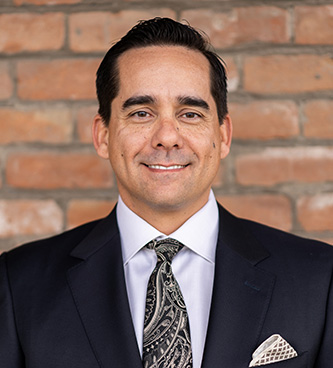
John Torgenson is a highly experienced personal injury lawyer with over 20 years of practice in Arizona. He earned his Bachelor’s degree from the University of Utah and his Juris Doctor from Notre Dame. John has a proven track record of securing substantial verdicts and settlements, including an $8.25 million recovery for a gunshot injury victim. His expertise has earned him AVVO ratings and recognition as a Super Lawyer.
John is also a sought-after lecturer on personal injury law, sharing his extensive knowledge with peers and aspiring attorneys. Beyond his legal practice, John is an avid golfer and actively supports organizations like the Military Assistance Mission, Arizona School for the Arts, Page Balloon Regatta, University of Arizona Foundation, Junior Achievement of Arizona, and the Tim Huff Pro Bono Golf Classic.
Passionate about advocating for injury victims, John dedicates his career to battling insurance companies and corporate interests, ensuring that the rights of those who are hurt are vigorously defended.